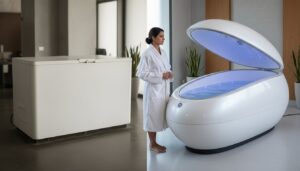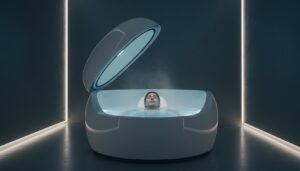
Owning a float tank is a significant investment in wellness, both for your clients and your business. To ensure its longevity, guarantee impeccable hygiene, and deliver a peak performance R.E.S.T. experience every single time, a consistent maintenance routine is essential. This guide will help you master the daily, weekly, and monthly tasks required to protect your float tank and your reputation.
Why Meticulous Float Tank Maintenance is Non-Negotiable
Proper maintenance goes far beyond a simple cleaning schedule; it’s the foundation of a successful float center. Neglecting this crucial aspect of operations can lead to equipment failure, poor client experiences, and potential health risks. The core of your responsibility as an owner revolves around three pillars of care: precise Water Chemistry, efficient Filtration, and thorough Physical Sanitation. By mastering these, you are actively protecting your capital investment from premature wear and damage, ensuring the absolute safety of every guest, and delivering the consistently premium, tranquil experience that builds a loyal clientele.
Just as you manage the micro-environment of the tank, it’s also crucial to consider the macro-environment of your facility. A wellness center with multiple showers and float tanks can be prone to building-wide humidity issues, a problem that specialists like HYPERSEC are equipped to solve to protect your property investment.
The Role of Epsom Salt in Tank Hygiene
The high concentration of Epsom salt in your float tank solution is your first line of defense. The solution, containing hundreds of kilograms of magnesium sulfate, creates a highly sterile, high-salinity environment where most microorganisms cannot survive. This natural property is a significant advantage, as it inherently inhibits the growth of many common bacteria. However, it’s crucial to understand that for a commercial-grade facility with a steady flow of clients, salt alone is not enough to guarantee complete sanitation. It must be paired with a robust, multi-stage filtration and disinfection process to meet the highest standards of safety and purity.
The Ultimate Float Tank Maintenance Checklist for Owners
A structured, repeatable schedule is the key to efficient and effective float tank maintenance. By integrating these tasks into your daily and weekly workflow, you can stay ahead of potential issues and ensure your float tank is always in pristine condition for the next client.
Daily Tasks (Performed Between Each Float Session)
- Run the complete post-float filtration cycle: This is the most critical step. Always allow the system to run its full filtration and sanitation cycle to process the entire volume of water.
- Visually inspect the water and skim any debris: Check for any floating hair or particles and remove them with a fine-mesh skimmer net.
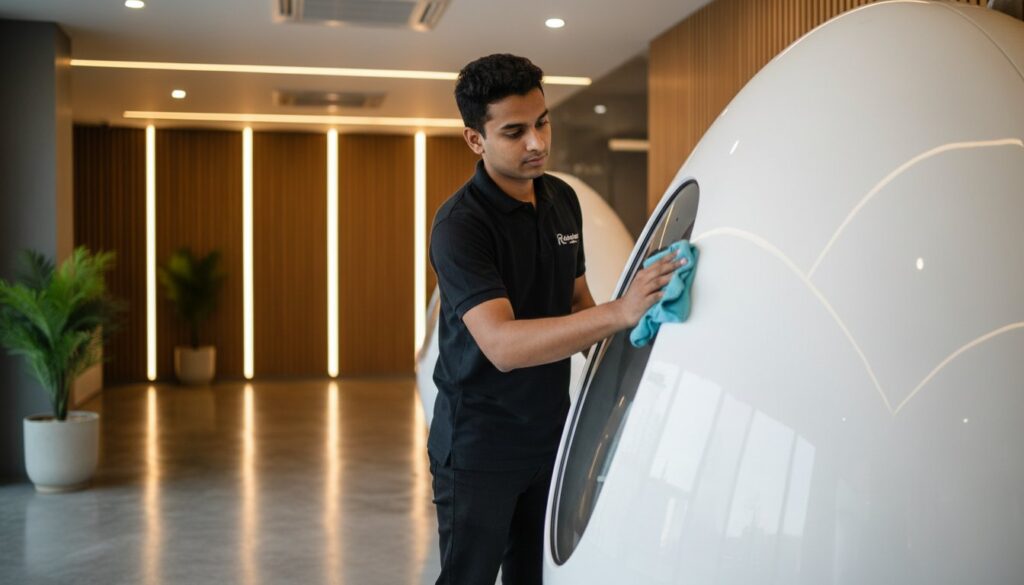
- Wipe down the tank interior at the waterline: Use a soft, non-abrasive cloth to wipe away any salt residue or film that has accumulated at the water’s surface.
- Sanitize all exterior surfaces, handles, and touchpoints: Thoroughly clean and disinfect any part of the pod the client may have touched, including the door, handles, and interior control buttons.
Weekly Water Chemistry Management
- Test and record pH and alkalinity levels: Use a reliable water testing kit to measure these key parameters. Consistent records help you identify trends over time.
- Adjust chemicals to maintain the ideal balance: Based on your test results, add the necessary balancing agents (like pH increaser or decreaser) to keep the water comfortable and your sanitizer effective.
- Check and top up your sanitizer: Most modern systems use a sanitizer like Hydrogen Peroxide (H2O2). Check its level and add more as needed according to manufacturer guidelines.
- Verify the specific gravity (salt concentration): Use a hydrometer to ensure the salt concentration is at the correct level for effortless floating. Top up with Epsom salt as needed, especially after water is displaced by clients.
Monthly and Quarterly System Deep Dive
- Deep clean the main filtration unit and pump basket: Turn off the system and clean out any hair or debris that has collected in the pump’s filter basket.
- Inspect and clean or replace your micron filter cartridge: Remove the main filter cartridge and give it a thorough cleaning. Replace it according to the manufacturer’s recommended schedule for optimal performance.
- Clean the UV sterilizer’s quartz sleeve: A thin film can build up on the quartz tube that houses the UV bulb, reducing its effectiveness. Carefully clean this sleeve to ensure maximum sanitation power.
- Recalibrate sensors and check heating system performance: Ensure temperature and chemical sensors are providing accurate readings. Check that the heating system is maintaining the water at a consistent, skin-neutral temperature.
Ensuring you have the right tools and hardware on hand for these deeper maintenance tasks is just as important as the schedule itself. For a comprehensive range of maintenance supplies, from durable tools to replacement hardware components, business owners can visit Yasu Trading Co. LLC.
How RelaxoPod Engineering Simplifies Your Maintenance Routine
Our design philosophy is centered on a simple principle: maximize the therapeutic benefits for your clients while minimizing the operational effort for you. We understand that your focus should be on creating a serene wellness experience, not on wrestling with complex upkeep. That’s why every RelaxoPod is engineered with systems and support structures that make maintenance straightforward and efficient.
Advanced Multi-Stage Filtration Systems
The heart of a RelaxoPod is its automated purification system. Powerful, silent pumps circulate the entire volume of water through the system multiple times between each float, ensuring a complete turnover. The water first passes through advanced 1-micron filters, which are capable of capturing even microscopic particles to deliver pristine clarity. From there, it flows through a high-output UV sterilization chamber that effectively neutralizes bacteria, viruses, and other pathogens. These automated cycles run seamlessly without requiring manual intervention, giving you peace of mind.
Durable, Low-Maintenance Materials
We build our float tanks to withstand the rigors of a commercial environment. The interior and exterior surfaces are constructed from non-porous, medical-grade materials that are incredibly easy to clean and sanitize. This premium construction is highly resistant to salt corrosion and discoloration, ensuring your investment maintains its elegant appearance for years to come. The design prioritizes longevity, reducing the need for frequent repairs or replacements.
Comprehensive Training and Long-Term Support
Your success is our success. That is why we provide full operational and maintenance training to you and your staff upon installation. We believe in building lasting partnerships, and our expert team is by your side for ongoing support whenever you need it. You will have access to detailed manuals, video guides, and direct troubleshooting help to resolve any questions that arise. This dedication to partnership is why we invite you to Request a consultation on operating a RelaxoPod center.
Frequently Asked Questions
How often should the water in a float tank be completely changed?
With proper daily maintenance, filtration, and chemical balancing, the water in a commercial float tank can last for a very long time. Most centers only need to completely drain and replace the water every 12 to 24 months, or as required by local health regulations.
What kind of chemicals are required for float tank maintenance?
The primary components are high-purity Epsom salt, a sanitizer (typically 35% food-grade hydrogen peroxide), and chemicals to balance pH and alkalinity levels. It is critical to use only products approved for use in float tanks.
Can I use common household cleaners on my float tank?
No. Never use household cleaners, bleach, or abrasive chemicals on your float tank surfaces. These can damage the acrylic or fiberglass finish and introduce contaminants into the water. Only use manufacturer-approved cleaning agents.
How long does a filtration cycle take between float sessions?
This depends on the system, but a typical high-quality filtration cycle will run for 15-25 minutes. This is designed to turn over the entire volume of water at least 3-4 times, ensuring it is perfectly clean for the next guest.
What is the most common maintenance mistake new float center owners make?
The most common mistake is inconsistent water chemistry testing. Skipping weekly tests can allow pH levels to drift, which reduces the effectiveness of the sanitizer and can lead to skin irritation for clients. Diligence and good record-keeping are key.
Are the maintenance needs different for a commercial pod versus a home-use pod?
While the core principles are the same, the frequency and intensity of maintenance are much higher for a commercial pod due to the high bather load. Commercial systems are also built with more robust, powerful filtration components to handle this demand.
A well-maintained float tank is the heart of a thriving wellness business. By following a consistent and thorough maintenance schedule, you not only protect your valuable equipment but also build a reputation for safety, cleanliness, and excellence. Our pods are engineered with automated, multi-stage filtration systems and premium, corrosion-resistant materials to make this process as seamless as possible. We are committed to being by your side with expert training and support from year 0 to 9. Ready to provide a world-class float experience with equipment designed for reliability? Discover the low-maintenance design of the RelaxoPod Float Tank.