Dipping into the world of cold water immersion can feel intimidating, but the rewards—from reduced inflammation to enhanced mental clarity—are compelling. The key to unlocking these benefits lies in a safe and measured approach. This guide will walk you through the essential step-by-step method for your first cold bath, ensuring you have a safe, effective, and invigorating experience right from the start.
Before You Plunge: Essential Preparation for Your First Cold Bath
A successful and safe cold plunge begins long before you turn on the tap. How you prepare your mind, body, and environment will dictate the quality of your experience. Your number one priority should always be safety, so never skip these foundational steps. The good news is, you don’t need any special or expensive gear to begin your journey.
Safety First: Who Should Avoid Cold Baths?
While cold water therapy has many benefits, it is not suitable for everyone. It’s crucial to approach this practice with caution and awareness.
- Consult your doctor before starting any new therapy. This is especially important if you have pre-existing health conditions.
- Note specific conditions. Individuals with heart issues, high blood pressure, circulatory problems like Raynaud’s syndrome, or who are pregnant should be particularly cautious and seek medical advice first.
- Never take a cold bath alone. For your first few sessions, ensure someone else is nearby in case you need assistance.
Your Simple At-Home Setup
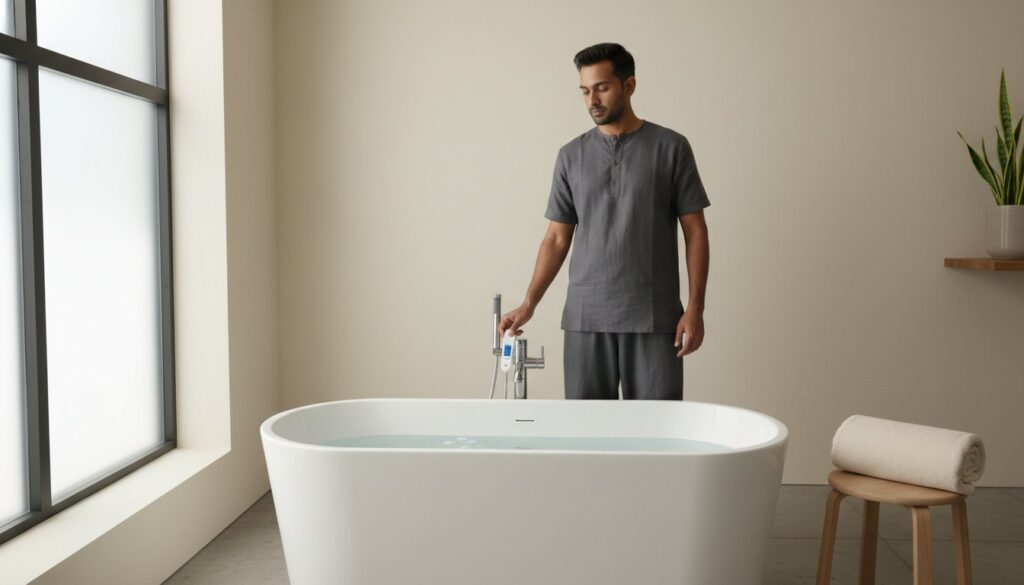
You can easily create a functional setup for your first cold bath with items you already have at home. Simplicity is key when you’re just starting out.
- All you need is a bathtub, cold water, and a thermometer. A waterproof thermometer is essential for accurately gauging the water temperature.
- Have a warm towel and comfortable clothes ready for afterwards. Place them within easy reach so you can warm up quickly once you get out.
- Optional: Use a timer or stopwatch. This helps you track your time accurately without having to guess, allowing you to focus on your body and breath.
Mental Prep: Control Your Response with Breathing
The biggest hurdle for beginners is the initial shock of the cold. The involuntary gasp and rapid heart rate is a natural physiological reaction known as the cold shock response. Your breath is the most powerful tool you have to manage it.
- The cold shock response is natural; breathing is your tool. Understanding this helps you stay calm and in control.
- Practice slow, controlled exhalations before getting in. Take a few deep, calming breaths to signal to your nervous system that you are safe.
- Focusing on your breath calms the nervous system. Once in the water, concentrate solely on maintaining a steady, slow breathing pattern to overcome the initial shock.
The Plunge: A Step-by-Step Guide for Beginners
Now that you are prepared, it’s time for the immersion. Follow these steps precisely to ensure your experience is controlled, safe, and positive. Remember, the goal for a beginner is not to endure extreme cold for long periods, but to build consistency and confidence safely.
Step 1: Set the Ideal Beginner Temperature
The temperature of the water is the most critical variable. Starting too cold can be overwhelming and unsafe, while water that isn’t cold enough won’t trigger the desired physiological response.
- Aim for 15°C (around 60°F) for your first time. This temperature is challenging enough to be effective but manageable for most beginners.
- Use a thermometer for accuracy; don’t just guess. The difference of a few degrees can significantly impact your experience.
- It’s better to start warmer and gradually go colder over time. As your body adapts over several sessions, you can slowly decrease the water temperature.
Step 2: The Immersion and the First 60 Seconds
How you enter the water matters. A slow, deliberate approach gives your body and mind time to adjust and helps you maintain control.
- Enter the water slowly and deliberately; no jumping. Submerge your body up to your neck at a steady pace.
- Focus entirely on your slow, controlled breathing. This is the most important action during the first minute. Exhale longer than you inhale.
- The initial gasp and shock will subside after 30-60 seconds. Your body will begin to adapt, and the intense feeling will lessen. Breathe through it.
Step 3: Duration – How Long to Stay In?
When it comes to cold plunges, more is not always better, especially at the beginning. Listen to your body’s signals above all else.
- For your first session, aim for just 1 to 3 minutes. This is more than enough time to start experiencing the benefits without pushing your limits too far.
- Listen to your body; get out if you feel dizzy or unwell. Never ignore signs of excessive shivering, numbness, or lightheadedness.
- Gradually increase your time in subsequent sessions. As you become more comfortable, you can add 30-60 seconds to your duration.
After the Bath: The Art of Warming Up Correctly
Your cold plunge doesn’t end when you get out of the water. How you warm up is just as important as the immersion itself for maximizing benefits and ensuring your safety. Avoid common mistakes that can hinder your recovery and cause discomfort.
How to Re-warm Your Body Safely
The goal is to allow your body to warm up gradually and naturally. Resisting the urge to jump into a hot shower is a key part of the process.
- Get out of the tub and dry off immediately. Use a warm, dry towel to remove all water from your skin.
- Put on warm, dry clothes, including socks and a hat. Covering your head and feet helps retain body heat effectively.
- Allow your body to warm up naturally; avoid a hot shower right away. A sudden shift to hot water can be a shock to your system and may cause dizziness. Gentle movement, like walking around, can help generate body heat.
From Cold Baths to a Dedicated Practice
As you progress, you’ll find that consistency is far more important than achieving extreme temperatures or long durations. Making cold baths a regular part of your wellness routine is where the real benefits accumulate. When you’re ready to advance your practice, a dedicated tub offers superior control and convenience. Professional-grade cold plunges are engineered to maintain a precise, constant temperature, removing the guesswork and providing an optimal therapeutic experience every time. If you’re ready to take that next step, you can explore the engineering behind the RELAXO COLD PLUNGE.
Frequently Asked Questions
How cold should the water be for a beginner’s first cold bath?
A great starting point for beginners is around 15°C (60°F). This temperature is cold enough to be effective but not so extreme that it becomes overwhelming. Always use a thermometer to be accurate.
Is it better to take a cold bath in the morning or at night?
This often comes down to personal preference. Many people prefer morning plunges as the rush of norepinephrine can provide energy and focus for the day. Others find a less intense, shorter plunge in the evening can help with sleep, though some may find it too stimulating.
Can I take a hot shower immediately after a cold bath?
It is best to avoid this. Rapidly heating the skin can trap cold blood in your core and may cause fainting or dizziness. Allow your body to re-warm naturally by drying off, putting on warm clothes, and moving around gently.
How often should I take cold baths to see benefits?
Consistency is key. Starting with 2-3 sessions per week is a great goal. This frequency allows your body to adapt and helps you build a sustainable routine to experience the cumulative benefits.
What are the warning signs that I should get out of the water immediately?
Listen to your body. If you experience uncontrollable or violent shivering, feel dizzy, lightheaded, disoriented, or notice your skin changing to a pale white or blue color, you should get out immediately and begin your re-warming process.
Embracing the cold is a powerful journey of resilience and recovery. By starting with a foundation of safety, preparation, and respect for your body’s limits, you can confidently make cold water immersion a transformative part of your life. When you feel ready to commit to a consistent and perfectly controlled practice, you can take the next step. Ready to elevate your wellness routine? Discover the RELAXO COLD PLUNGE.